
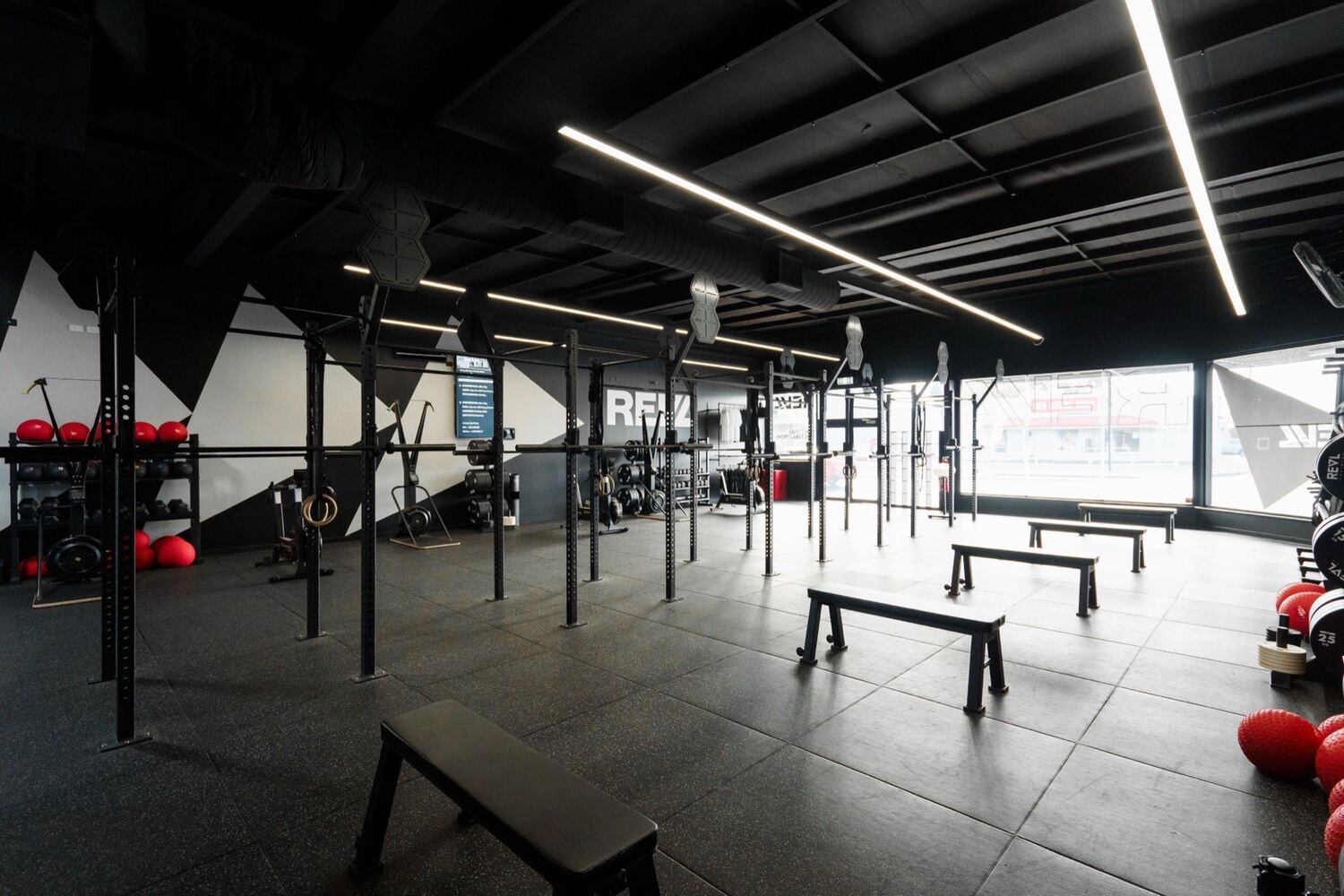
The training model
Two kinds of group training already existed. REVL was built for the space between them.
Begin
What already existed
Both of these are good businesses run by good operators. Neither is the enemy. What matters is what each one optimises for, because that is where the space opened up.
Station based group training, 45 to 50 minutes, big energy, a different workout most days. The variety is the product, and it is a good product.
These brands do progress their members. What they mostly progress is the exercise bank.
Barbell strength, gymnastics and conditioning, measured and repeated, inside a culture people genuinely love. It builds real athletes.
REVL is careful here and so are we. Their only published line is that REVL is less complex than a CrossFit-level routine.
Too many programs lacked the structure and stimulus members needed to see tangible progression.
Ben Woolford and Josh Mildren, REVL foundersWhere are you coming from?
So the rest of this reads for you rather than at you. One tap, nothing to fill in.
The position
REVL, on its own positioning
The move REVL makes to close that gap is not a new list of exercises. Anyone can buy more equipment and write more movements. The move is periodisation: the structure a strength coach would put an athlete through, delivered to a room full of people who have day jobs.
Take the accessibility, the coaching and the energy of a group class, and put a real training program underneath it. REVL's own framing is that it elicits the same results as one on one training, inside a group.
The 13 week block
This is the actual differentiator. Not the class names and not the equipment. Thirteen weeks, written in advance, with load and volume moving deliberately across it.
The goal is that today is different from yesterday. Members stay engaged because they cannot predict it.
What it is good at: turning up is never boring, and a beginner is never exposed.
What it cannot easily do is tell a member how much stronger they are than on week one, because there was never a week one.
Thirteen weeks, written in advance by specialists, informed by sports science. Load, volume and intensity move deliberately.
A Monday deadlift in week eleven is meant to be heavier than the one in week two.
REVL's own words: train a 13 week block programmed by experts, informed by sports science.
REVL runs its year in these blocks and numbers them for members. Block 1 opens in January, Block 3 lands in July, and the final block closes out in December. Each one gets its own launch. Thirteen weeks, four times, is a training year.
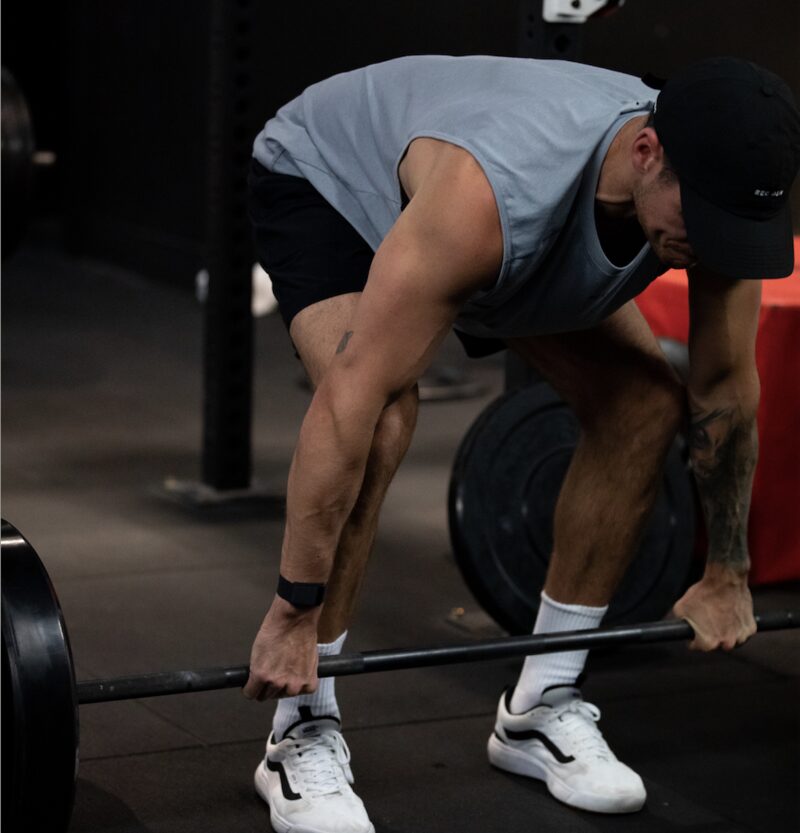
The same bar, heavier, eleven weeks later.
Progressive overload is the mechanism, not a marketing word.Three streams, one room
Perform and Move are the strength days and they run simultaneously. Sweat is the conditioning day. Every session is 50 minutes, and a coach demonstrates every part of it.
| Day | Running | What it is |
|---|---|---|
| Monday | Perform + Move | Deadlift day, both sides of the room |
| Tuesday | Sweat | Sprint, Engine or Team |
| Wednesday | Perform + Move | Squat for Perform, bench and erg for Move |
| Thursday | Sweat | Sprint, Engine or Team |
| Friday | Perform + Move | Bench for Perform, squat anchored for Move |
| Saturday | Sweat | The big one. Team formats and the room full |
REVL recommends three to five sessions a week. There is also PACE, a running program that takes members from 5K to a marathon alongside the core streams.
Monday morning. Which side of the room?
Both are running at once. Most people know their answer immediately.
One session, three lanes
This is a real REVL board from a Sweat Team session. Look at the numbers. Every prescription carries three, because the room holds three levels at once and the member picks a lane.
Warm up · 4:00 cap
The warm up scales two ways, not three.
Teams of 4 · 45:00 cap
Buy in: 600m DBall Carry (2:2) or 4:00 Synchro Hold (2:2)
Buy out: 800/600/400m Team Run or 100/80/60 x Synchro Burpee (2:2)
Tap a level to light the numbers that member works to.
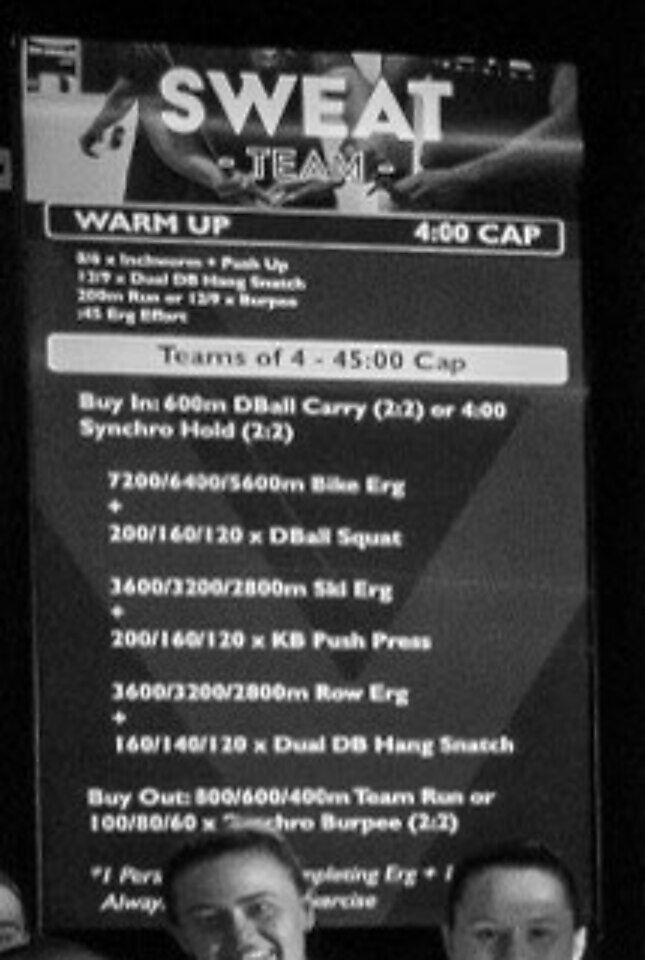
The same board, photographed on the wall of a REVL studio. The clock above it reads 00:00 because the session had just finished. Nothing beside it is invented.
It is also why the strength days run two programs side by side. Somebody chasing a bigger deadlift and somebody chasing body composition can train at 6am on the same floor, coached, without either one compromising.
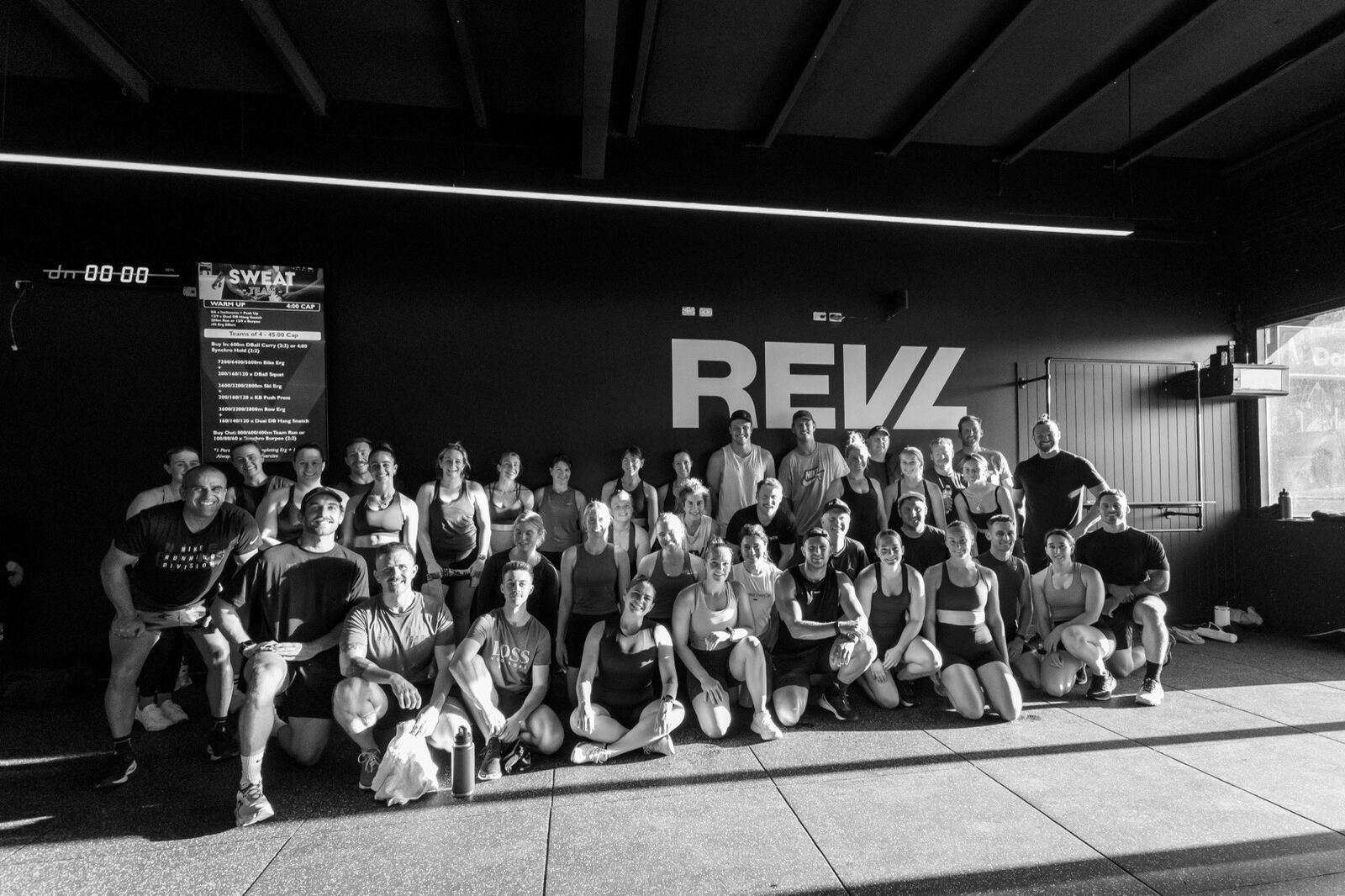
The room that board filled.
The board is on the left of frame, the clock above it.Why it is a better business
It's a proven model that drives exceptional member retention, sustained studio revenue growth and strengthened brand longevity.
REVL Franchise Information Pack, 2026A variety format has to keep being interesting. A block has to keep being harder. When a member can see week one against week thirteen, renewing stops being a decision about entertainment.
REVL sits above the circuit brands, and it can, because it is not selling the same thing. The fourth circuit gym on a strip competes on discount. A category of one competes on outcome.
Programming is written centrally and every coach is certified in the REVL methodology before the doors open. Your best coach leaving is a staffing problem, not a product problem.
Running Perform and Move at the same time means a single 6am slot serves two different member goals. That is a floor plan and a timetable working together.
Four blocks means four natural launch moments, and the training year finishes at Team Games where members compete in exactly what the blocks trained.
What you would run
The programming arrives. You are not writing 52 weeks of training a year and neither is your head coach. That is the single biggest thing an independent operator carries that you would not.
What you do carry is the room. Hiring coaches and keeping them good. Making a 6am feel like somewhere people want to be. REVL's own culture line is that REVL is a feeling, and a feeling is built by the person who owns the place.
Which of those two lists is the reason you are reading this?
There is no wrong answer, and it changes who from our team should call you.
Two ways to go further
One is a conversation, the other is a workout. Half an hour of your questions, or a session in a studio near you.
The call is half an hour and there is no pitch. If you would rather feel it before you talk about it, we will get you on a floor.